Can Ceramic Tint Help Your AC Work Less in Florida Heat?
If you've ever gotten into a car parked outside at Kennedy Space Center, a Melbourne parking lot, or anywhere along Brevard County's sun-drenched coastline on a summer afternoon, you already know the answer feels obvious before you even ask the question. The cabin is oppressively hot, the AC runs at full blast for minutes before making a dent, and by the time things cool down you're halfway to your destination. The question isn't whether Florida heat is brutal — it's whether ceramic window tint actually changes that experience in any meaningful, measurable way.
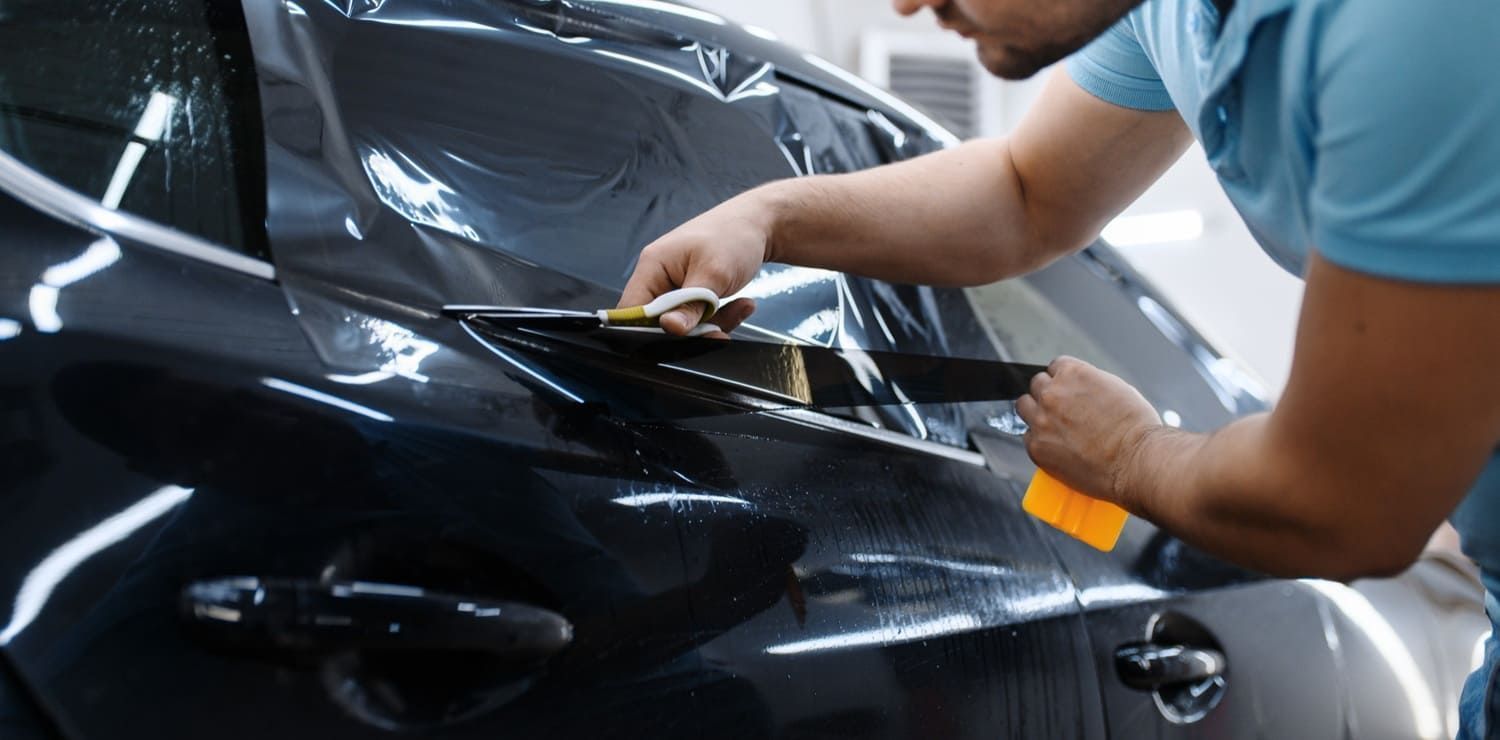
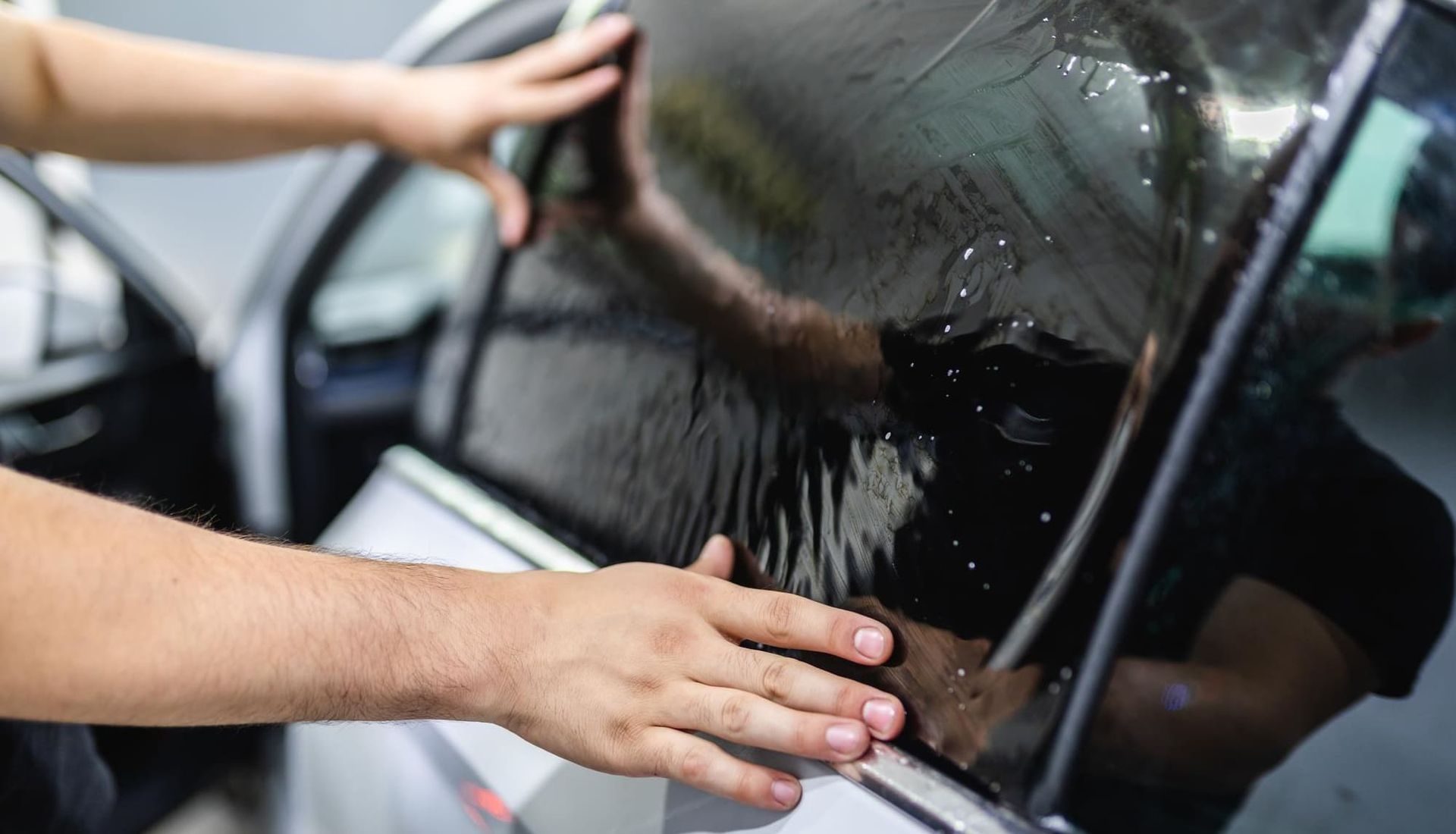
The answer is yes, and the mechanism is more specific and interesting than most people realize. Ceramic tint — particularly the FormulaOne Stratos and Pinnacle series installed by Sunstopper Window Tinting in Melbourne, the original and only CPFilms Accredited Elite Dealer in Brevard County — reduces the thermal load your AC has to fight before it can make the cabin comfortable. It does this primarily by blocking infrared radiation, the component of sunlight responsible for roughly 53% of the solar heat that builds up inside a parked or moving vehicle. Less heat entering the cabin means the AC reaches comfort faster, runs at lower output to maintain it, and places less continuous strain on the compressor across the lifetime of the vehicle.
This guide explains exactly how that works, why infrared rejection is the number that actually matters for heat and AC performance, how FormulaOne's Stratos and Pinnacle ceramic series compare, and how the same principle applies to homes and commercial buildings across Melbourne, Viera, Palm Bay, Rockledge, Merritt Island, and the broader Brevard County area.

Why Florida Vehicles Are So Hard to Keep Cool
Understanding what ceramic tint is actually working against helps explain why it makes a measurable difference in a climate like Brevard County's.
The sun's energy arrives at your vehicle through three components: ultraviolet radiation (UV), visible light, and infrared radiation (IR). Together these make up what the window film industry calls Total Solar Energy. The proportions matter: UV accounts for roughly 3% of solar intensity, visible light accounts for approximately 44%, and infrared accounts for the remaining 53%. That means more than half of the solar energy heating your car is invisible — you can't see it, but you absolutely feel it as the heat baking through glass onto your dashboard, seats, steering wheel, and the air inside the cabin.
Melbourne sits at roughly 28 degrees north latitude, delivering solar angles that are nearly overhead for much of the year. Unlike northern states where the sun's lower seasonal angles reduce the intensity of solar energy striking horizontal surfaces, Brevard County vehicles receive near-maximum solar intensity on their roof, windshield, and hood for essentially the entire year. That unrelenting solar load is what makes Florida car ownership uniquely punishing on AC systems.
When a vehicle parks in direct Florida sun, interior surface temperatures can climb to 150°F or higher on dark surfaces. The AC compressor doesn't just need to cool air — it has to first overcome the thermal mass of every surface in the cabin that has been absorbing solar energy for however long the car sat outside. The longer and hotter that pre-soak, the harder and longer the AC has to run before the car reaches comfort.
Ceramic tint addresses this at the source.
How Ceramic Tint Actually Reduces Heat — The Infrared Story
This is where most marketing language about window tint falls short of the full explanation. Standard dyed film absorbs visible light, which reduces brightness and provides some glare control, but dye molecules have limited ability to block infrared radiation — the dominant heat source. You can install very dark dye film and still have a hot car because the darkness is blocking visible light while a large portion of the infrared energy passes through largely unimpeded.
Ceramic film uses an entirely different mechanism. FormulaOne's nano-ceramic technology — and specifically the Hybrid-Matrix construction used in the Stratos Series — embeds billions of nanoscopic ceramic particles in multiple micro-thin film layers specifically designed to trap infrared radiation and disperse it outward through the glass rather than allowing it to transfer into the cabin. These particles are non-metallic and non-conductive, so they accomplish this infrared interception without interfering with GPS, cell phones, satellite radio, or any of the electronic systems that modern Melbourne drivers depend on.
The scale of these particles is worth appreciating: placed side by side, 2,000 of them span the width of a single human hair. At that density of infrared-trapping nanoparticles across the film's layers, the cumulative effect on heat rejection is substantial — FormulaOne Stratos rejects up to 63% of solar heat entering through the glass. That is the direct mechanism by which ceramic tint helps the AC work less: it reduces the infrared-driven heat load inside the cabin before the AC ever has to deal with it.
The practical chain of events for a Melbourne driver with FormulaOne ceramic tint runs like this: less infrared enters the glass, cabin surface temperatures are meaningfully lower when you get in, the AC starts from a lower thermal baseline, reaches comfort temperature faster, and runs at reduced output for the remainder of the drive. Over thousands of driving days across a Florida vehicle ownership period, those individual improvements compound into real fuel savings, reduced wear on the AC compressor, and a consistently more comfortable driving experience.
FormulaOne Stratos vs. Pinnacle: Which Delivers More Heat Relief?
Sunstopper Window Tinting carries both FormulaOne's Stratos and Pinnacle ceramic series, and understanding the difference between them is directly relevant to the AC benefit question.
Both series use nano-ceramic technology and block more than 99% of UV rays — so on UV protection, they're equivalent. Both are non-metallic and signal-safe. Both carry FormulaOne's lifetime limited manufacturer's warranty. The meaningful performance difference is in Total Infrared Rejection (TIRR), the measurement that most directly corresponds to heat blocking and AC relief.
TIRR is measured across the full infrared spectrum from 780nm to 2500nm, following IWFA (International Window Film Association) standards — the same methodology Sunstopper's Stratos Series page uses to display comparative data. When comparing the same VLT (shade level) across Stratos and Pinnacle, Stratos delivers measurably higher TIRR at every shade tested. This makes sense given the product architecture: Stratos uses Hybrid-Matrix technology, the most advanced nano-ceramic construction in FormulaOne's lineup, specifically engineered to maximize infrared absorption across the full IR spectrum. Pinnacle uses strong nano-ceramic technology but with a less concentrated particle architecture that produces lower TIRR at equivalent shades.
What this means practically for Melbourne and Brevard County drivers: Stratos delivers the most AC relief, the coolest cabin at a given shade, and the greatest fuel efficiency benefit from reduced compressor load. Pinnacle delivers genuine ceramic heat rejection — substantially better than any dye-based film — at a lower price point. For drivers who want the maximum benefit, Stratos is the answer. For drivers who want strong ceramic performance with a more accessible investment, Pinnacle delivers real results.
| Film | Technology | UV Rejection | TIRR vs. Pinnacle | Signal Safe | Warranty |
|---|---|---|---|---|---|
| FormulaOne Stratos | Hybrid-Matrix nano-ceramic | 99%+ | Highest — outperforms Pinnacle at all VLTs | Yes | Lifetime limited |
| FormulaOne Pinnacle | Nano-ceramic | 99%+ | Excellent — strong ceramic performance | Yes | Lifetime limited |
| FormulaOne Classic | Nano-ceramic (entry ceramic) | 99%+ | Good — meaningful improvement over dye | Yes | Lifetime limited |
| Dyed film (generic) | Dye-based absorption | Moderate | Low — minimal IR blocking | Yes | Varies |
Does Tint Have to Be Dark to Help the AC?
This is one of the most important questions Melbourne drivers ask, and the answer — counterintuitively — is no.
Darkness (VLT percentage) and infrared heat rejection are separate performance characteristics in ceramic film. A nearly clear ceramic film can still block substantial infrared radiation because the nanoparticles that do the work operate independently of how much visible light the film transmits. This is the principle behind FormulaOne's AIR Series — an optically clear, near-invisible ceramic film that still delivers UV protection and meaningful heat rejection without any visible darkening of the glass.
For Brevard County drivers concerned about Florida's tint law limits on front windows (which require more than 28% VLT on front side windows), this distinction matters significantly. You don't have to go to the darkest legal shade to get meaningful AC relief from ceramic film. A lighter-shade Stratos or Pinnacle film — legal on front windows — provides genuine infrared rejection that helps the AC work less, even though it looks subtle from outside the vehicle. The heat protection doesn't require darkness; it requires the right technology.
This is also why ceramic film outperforms dark dye film at equivalent shade levels: a 35% VLT Stratos film does more to help the AC than a 35% VLT dye film because it addresses the infrared component that the dye film largely ignores.

The AC Benefit in Homes and Commercial Buildings: Same Physics, Bigger Scale
The same infrared-blocking mechanism that relieves automotive AC systems applies directly to residential and commercial buildings — and at larger scale, the energy savings become even more significant.
Sunstopper Window Tinting installs residential and commercial window film from LLumar and Vista across Melbourne, Palm Bay, Viera, Rockledge, Merritt Island, Titusville, and the broader Brevard County area. Residential LLumar films reject up to 79% of solar energy coming through home windows, which directly reduces the heat load on south- and west-facing rooms that receive the most direct Florida afternoon sun.
For Melbourne homeowners, this translates to AC systems that cycle less frequently during peak afternoon heat, more consistent temperatures between rooms without the "hot room" effect common in Florida homes with large unprotected window expanses, and lower monthly energy bills. Sunstopper's residential film benefits page notes the energy savings benefit explicitly: the film helps keep heat inside in winter and outside in summer, reducing energy use across both seasons in Florida's distinct climate.
For commercial buildings across Brevard County — office complexes along Wickham Road, retail storefronts, medical facilities, and commercial spaces with large glass window walls — the energy cost reduction is quantifiable. On average, commercial window films reduce a building's energy costs by 5-15% according to industry data cited by Sunstopper's commercial tinting page. That figure represents ongoing, compounding savings across every month of Florida's long cooling season, which in Brevard County runs essentially year-round.
Sunstopper also provides both residential and commercial Energy Savings Calculators on its website, allowing Melbourne homeowners and business owners to enter their specific window area, orientation, and current utility costs to estimate actual projected savings before committing to an installation.
What Happens to the AC Benefit Over Time?
A legitimate question for Melbourne drivers investing in premium ceramic tint is whether the heat rejection performance degrades over time — because a film that works great for two years and then loses its effectiveness isn't the same value as one that holds its performance for a decade.
This is where ceramic technology's fundamental advantage over dye film matters most. Dye molecules degrade under sustained UV exposure, which is why dye-based tint eventually fades, shifts color, and loses performance. As the dye breaks down, heat rejection declines alongside the visual appearance. Ceramic nanoparticles don't have this degradation mechanism — they're chemically stable under UV exposure in a way that organic dye molecules simply are not.
FormulaOne Stratos and Pinnacle films carry a lifetime limited manufacturer's warranty covering color change, bubbling, and cracking for as long as the original owner has the vehicle. That warranty reflects the manufacturer's confidence in the long-term stability of the ceramic technology. For Melbourne drivers, this means the heat rejection that helps the AC on day one is still working at the same level year five, year eight, and beyond — not declining gradually as cheaper film chemistry breaks down under Brevard County's relentless sun.
Sunstopper Window Tinting's customers reflect this in their reviews: one returning customer notes having had four vehicles done over the years and specifically recommends the ceramic tint, while another mentions returning after more than 20 years and finding quality unchanged. That kind of long-term customer loyalty is grounded in the real durability of the film technology — ceramic tint that continues to help the AC work less throughout the ownership period is a genuinely different investment than film that needs replacing every few years.
Frequently Asked Questions
Does ceramic tint actually help the AC in Florida heat?
Yes, measurably. Ceramic tint — particularly FormulaOne Stratos and Pinnacle — blocks a substantial portion of infrared radiation before it enters the cabin, reducing the heat load the AC must overcome. The result is a cooler starting cabin after parking, faster cool-down times, and reduced AC compressor output during driving. FormulaOne Stratos rejects up to 63% of solar heat.
Does tint have to be dark to block heat?
No. Infrared heat rejection and visible light transmission (darkness) are separate specifications in ceramic film. The nano-ceramic particles that block infrared work independently of how much visible light the film transmits, which means lighter-shade ceramic films still deliver meaningful heat rejection — including options legal on Florida front windows — without requiring maximum darkness.
What is infrared rejection and why does it matter for AC?
Infrared radiation accounts for approximately 53% of the solar energy that heats a vehicle's interior. Blocking infrared is therefore the most impactful mechanism for reducing cabin heat load — more so than blocking UV or visible light. FormulaOne's Hybrid-Matrix nano-ceramic technology traps and disperses infrared outward through the glass rather than allowing it to transfer into the cabin, which is the direct mechanism that reduces AC workload.
What's the difference between FormulaOne Stratos and Pinnacle for heat?
Both use nano-ceramic technology and block more than 99% of UV rays. Stratos uses Hybrid-Matrix construction — the most advanced particle architecture in the FormulaOne lineup — and delivers higher Total Infrared Rejection (TIRR) at every shade level compared to Pinnacle. For maximum AC relief and cabin cooling, Stratos is the superior choice. Pinnacle delivers strong ceramic performance at a more accessible price.
Does residential ceramic film help lower AC bills in Melbourne homes?
Yes. LLumar residential window films installed by Sunstopper reject up to 79% of solar energy through home windows, reducing the heat load on south- and west-facing rooms and allowing AC systems to run more efficiently. Sunstopper provides a residential energy savings calculator on its website so homeowners can estimate their specific projected savings.
Will ceramic tint's heat rejection decline over time?
No — unlike dye-based films whose performance degrades as the dye breaks down under UV exposure, ceramic nanoparticles are chemically stable and maintain their infrared-blocking performance throughout the life of the film. FormulaOne Stratos and Pinnacle carry a lifetime limited manufacturer's warranty reflecting this long-term stability.
The Bottom Line for Melbourne and Brevard County Drivers
Ceramic tint does help your AC work less in Florida heat — and the reason is specific and measurable, not just a general comfort impression. By blocking a substantial portion of the infrared radiation that accounts for the majority of solar heat gain inside a vehicle, FormulaOne nano-ceramic film reduces the thermal load the AC has to overcome, speeds up cool-down after parking, and reduces compressor output during driving. That benefit holds for the life of the film, unlike dye-based alternatives whose heat rejection declines as the film degrades. For homes and commercial buildings across Brevard County, the same mechanism translates to lower energy bills through reduced solar heat gain through windows.
Sunstopper Window Tinting is the original and only CPFilms Accredited Elite Dealer in Brevard County and the exclusive
LLumar SelectPro FormulaOne dealer for Melbourne and the Space Coast — serving
Melbourne, Palm Bay, Viera, Rockledge, Merritt Island, Titusville, Indian Harbour Beach, and surrounding communities since 1979 under owner Ken Campbell with over 35 years of window film industry experience.
Call 321-768-1215 or request a
free estimate online to find the right FormulaOne ceramic film for your
vehicle,
home, or
commercial building.